Showing posts with label Archives. Show all posts

Friday, September 18, 2015

Central Florida Archivists at The Dalí

Today the Central Florida Archivists met at The Dalí museum in St. Petersburg. We chatted in their gorgeous conference room about what all of our institutions had going on. Then, our hosts gave us a behind the scenes tour of the archive. They even had some special items pulled out for us to enjoy. My favorite was this note from Salvador Dalí, handwritten on a wax paint palette.


After the meeting, we were all set free in the exhibits. The traveling exhibit they had on display during this visit was M.C. Escher - I was so excited. He's one of my favorite artists, and I spent the rest of the day in this gallery - never actually made it to the rest of the museum! So many prints - and original woodblocks were on display as well. Unfortunately, no photography was allowed in the gallery, so all you get is the title wall.

Monday, September 14, 2015

A look back at Custom Clamshells

Back in my Book Conservator days (at Special Collections & University Archives, UCF Library), one of my favorite responsibilities was making custom clamshells. Many books in the collection needed a protective clamshell and I'll admit that some days it would get a little monotonous: rectangle after rectangle after rectangle. But then, every once in a while, there would be an Artist Book with an unusual shape or a 3D artifact that would need a truly creative housing. I stumbled across my old portfolio of extra custom clamshells and thought I would share!


Tuesday, September 8, 2015

Preserving Visual Materials at the McKay Archives - Florida Southern College


In July I had the pleasure of attending the Society of American Archivists' two day workshop on Preservation and Identification of 20th Century Visual Materials. Not only was this a great workshop on a great topic, but it was also hosted by the impressive McKay Archives on the stunning campus of Florida Southern College.

The best part of the workshop was the instructor John Waggener's impressive teaching collection of photographs. It's so hard to tell, for example, if you're looking at an Albumen POP print or a Collodion POP print just by reading a description in a book. Having the opportunity to handle and compare all the different processes side by side was absolutely invaluable. We even had the opportunity to experiment with Impossible film- the Impossible Project's attempt to recreate Polaroid's lost formula for instant film.

The second best part of the workshop would have to be the people. We had an excellent crew with representation from Disney, The Ringling Museum, Stetson University, St. Petersburg College, the State Archives, several local libraries, and our gracious hosts at the Roux Library & McKay Archives. We even worked in a little tour of the McKay Archives led by Gerrianne Schaad, which included a processing area, gorgeous moveable shelving, and a small gallery.

The third best part of the trip was running around the Florida Southern campus and frolicking among all  of Frank Lloyd Wright's designs. I'm pretty sure I entered some buildings that I was not technically supposed to be in, but the campus was all but abandoned and I did not find a single locked door. For more photos of the Archives tour and my adventure through the Florida Southern campus, enjoy the Facebook album here.

Pretty sure I'm not supposed to be here.


Monday, March 23, 2015

Collections Manager - Orange County Regional History Center

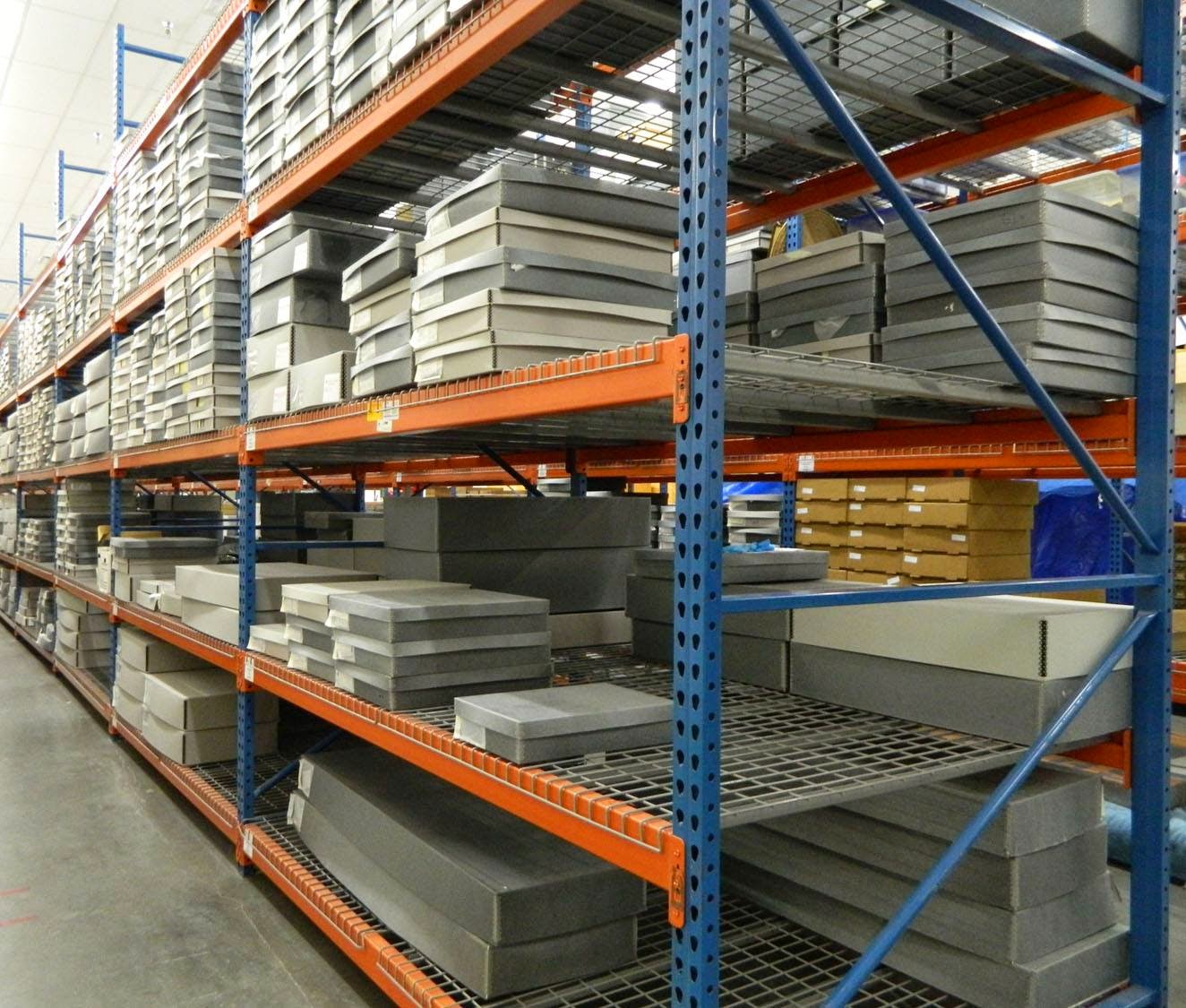
For the past six months I've had the pleasure to look out on this view as the new Collections Manager at the Orange County Regional History Center. It was sad leaving the UCF Library, but also very exciting to have a full time position doing something I love and working in a museum! One of the biggest perks of my new job is being so close to my own family's history. I am a fourth generation Central Floridian and my great-great-grandparents moved to Orlando in 1893. The Hanson family farm is now the site of Jones High School,  the Hanson Shoe Repair shop on Pine Street is now a speakeasy by the same name, and my Grandpa's packing house, Indian Lake Fruit Co., lives on in the citrus label collection. 
Here is a snippet from my newly updated CV to give an idea of what I'm up to over at the History Center, and no, I'm not calling people and collecting money:

"Responsible for the day-to-day management of the historical collection including completing and maintaining paperwork for donated items and loans and implementing basic conservation treatments. Monitor the environmental conditions and security of the museum’s permanent and traveling exhibits. Coordinate scheduling, delivery, and installation of museum traveling exhibits and complete condition reports. Maintain the museum collection management software database. Process and catalog collections with special emphasis on the 3-D artifacts and photograph collection. Assist in the creation and installation of exhibits. Assist in obtaining new donations and responsible for overseeing the collection management policy. Member of the Editorial Board for the quarterly publication of the Historical Society, Reflections Magazine."

View of the collection at our offsite storage facility


Monday, January 27, 2014

Removing Tape from a Dust Jacket


Another sad story of a well meaning collector trying to protect their books... with scotch tape. For the love of all that is good in this world, never "fix" your books with tape!
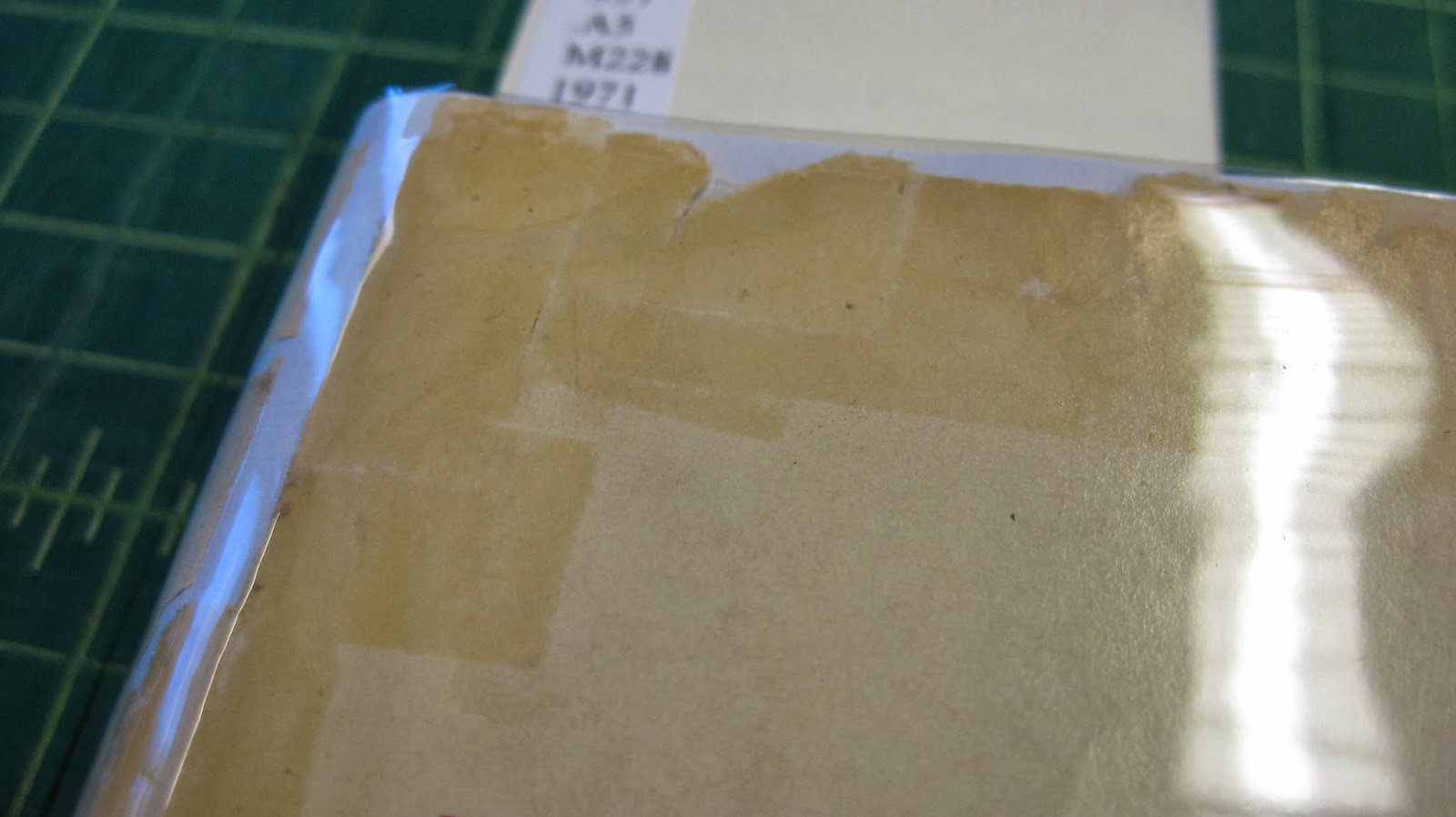
There are many books in our collection of Archimedes Patti's research materials. Many of those books have dust jackets and most of those dust jackets have been taped onto their respective books. This book especially won (lost?) the tape lottery. Every fold or scuff or scrape has been taped over. Even the back of the jacket had extra paper taped to it.
It took my microspatula, alcohol, a tacking iron, and all the patience I could muster to lift all of this tape, but in the end the tape was beat and the dust jacket got a new archival form of protection.

A whole new layer of terror

Monday, October 28, 2013

The Frame-up System - Japanese Tissue Repair

 I dedicate this post to how awesome Japanese tissue paper is. The cover of this leftist pamphlet from our Van Sickle collection was in taters (luckily no one had tried to tape it back together yet). After removing the rusty staples I was left with a gnarled cover in two, almost three, separate pieces. I carefully unfolded everything that was bunched together then mended all the tears from the back with Japanese tissue paper and wheat paste. The before and after results are below.


Before


After


Wednesday, October 16, 2013

DO NOT tape Faust into your Library book!


I don't care how cool and appropriate that nice leather book would look in your play, just don't do it. I'm lookin' at you, Gretchen! You may have been saved in the end, but who was there to save this book? Not you. It took me an entire hour to meticulously lift the scotch tape with an alcohol dipped micro spatula. Luckily the pages on this 1957 volume are clay coated which made the tape removal much easier than it could have been. Still, there is nothing to be done about the staining that has already set in from the adhesive.

Monday, November 26, 2012

WOMEN - African American Legacy: The Carol Mundy Collection


Two Special Collections exhibits in one week! This post is slightly delayed, but I was actually working on this exhibit at the same time as the Nierman exhibit at the beginning of November. Just slightly delayed...

This exhibit features photographs of women from the 1850s to the 1950s selected from African American Legacy: The Carol Mundy Collection. It was curated by Sandra Varry and was designed and prepared by myself. All of the photos that are on display were scanned, reprinted (some enlarged to assist with viewing), and mounted in order to protect the originals from the UV damage of being on display for several months. The exhibit also has a selection of awesome period cameras that are on loan to us. I feel bad since the photos should be the focus, but the cameras might be my favorite thing.

This exhibit is on the 5th floor exhibit area and will be there until the end of January when it will move into the cases on the main floor during Black History Month. At the end of February it will return to the  5th floor.


Thursday, June 7, 2012

A Photo History of the UCF Library

Exhibit mock-up on graph paper - one square to every six inches.
I've recently co-curated the Special Collections and University Archives exhibit A Photo History of the UCF Library which I installed this past Friday. As with all the exhibits I've done with SC&UA, it was immensely interesting and consuming. The library is the first academic building on campus and one of the only buildings ready for classes in 1968, which meant the library housed many random university needs including weightlifting as well as books. This exhibit is in preparation of UCF's 50th anniversary and is installed on the 72 ft. art wall at the main entrance. It's a step up, in size and exposure, from the exhibit area we have right outside of the department. I don't usually make such an extensive plan for an exhibit (pictured above) but since we only had one day to set it up I wanted to make sure we had all our ducks in a row beforehand. I've grown quite fond of my graph paper mock-up. The only significant difference from the plan and the actual is the absence of the groundbreaking shovel and Nierman's maquette of the Flame of Hope. The exhibit would have been approximately 10% cooler with their inclusion, but we also didn't want anyone walking out with them since it is so close to the entrance.

I haven't been lurking around the wall since I've put it up, honestly I haven't, but already I've seen a group men looking at photos from the 1981-1984 expansion and pointing out all their old buddies. I hope this exhibit is causing that kind of reminiscing even when I'm not creeping around the corner.

Exhibit will be up June 1 - July 31


Friday, May 18, 2012

Groom/Stick

Today at work in Special Collections I encountered Marbling: a history and a bibliography by Phoebe Jane Easton which had been a victim of a particularly vicious act of book on book violence. It had the extreme misfortune of being shelved next to a deteriorating leather book. As you can see, neither were wrapped in mylar and Marbling sustained extensive red rot staining on its cover.

Fortunately for Easton's book, the Acquisitions Department had just cleaned out a storage area and brought me a cart full of supplies to go through and keep if I wanted. In those supplies were two packages of Groom/Stick.

My first impression of Groom/Stick was that it must be some form of book torture that in one long gone day was thought to work. I did some research and found that instead it was supposed to be a revolutionary new cleaning material:

GROOM/STICK is a novel form of natural rubber with specific properties combining to create a surface dry-cleaner of high efficiency. The rubber's natural structure has been modified to make it permanently soft, kneadable and strongly tacky. Moisture, solvents and chemical additives have been excluded.

As a non-abrasive, non-staining cleaner of paper and other library materials, Groom/stick gently but positively picks up a wide range of foreign matter. Graphite, carbon, charcoal, chalk, crayon, dry powder colours, mould spores, dust, dirt and grease are cleanly lifted off the surface and held in a 'molecular trap' from which there is no escape!

The process is fast and smear-free. It is demonstrated by lightly rolling a Groom/stick 'cigar' across a freshly-printed newspaper. Excess print ink is removed instantly - without blurring the print or soiling adjacent clean areas. Ordinary solid or granular rubber/resin erasers abrade, smudge, crumble or produce clinging debris. Groom/stick sacrifices nothing of itself, leaves no dirty fragments to brush away (or mould spores to regenerate in concealed areas) and is always ready and clean to use.


 I decided to give it a shot and the results were earily exactly what the promotional material said they would be. While I didn't find rolling the material into a cigar a very easy endeavor (my lump looks more like a creepy alien-esque cacoon), I did find that the surface dirt it grabbed would never escape from it's plasticky grave. Here it is covered in red rot powder and none of it is transfering to my hands or any other part of the book. In fact, it was cleaning me. I could see it, while still covered in powder, taking all the oil that I didn't know I had off my fingertips.

Groom/Stick is my miracle item of the week. Enjoy these before and after photos:


Friday, January 13, 2012

Removing... *sigh* Chocolate

 What's that on this book? Is it a crayon? Is it poop?! No! It's CHOCOLATE! Because who doesn't love a sweet treat when perusing some Dolce and Gabbana fashion. This is a rare instance where I fixed up a book from our general, circulating collection - hence the chocolate. Just a bit of careful scraping with the micro-spatula and a final pass with a soft eraser.


Tuesday, January 10, 2012

Carry Me

"Carry me out of the host, for I am wounded."
This is the Adorable Wood Engraving of the Day! While removing the library stickers from some of our new arrivals at Special Collections I found this little guy. He's from the book Infelicia by Adah Isaacs Menken published in 1868. What makes this especially adorable is the caption underneath him reading "Carry me out of the host, for I am wounded." Now I can't see the frog's out stretched arm without imagining him crying "Enh! Carry me!" I think I may submit this to Cute Overload.

Saturday, January 7, 2012

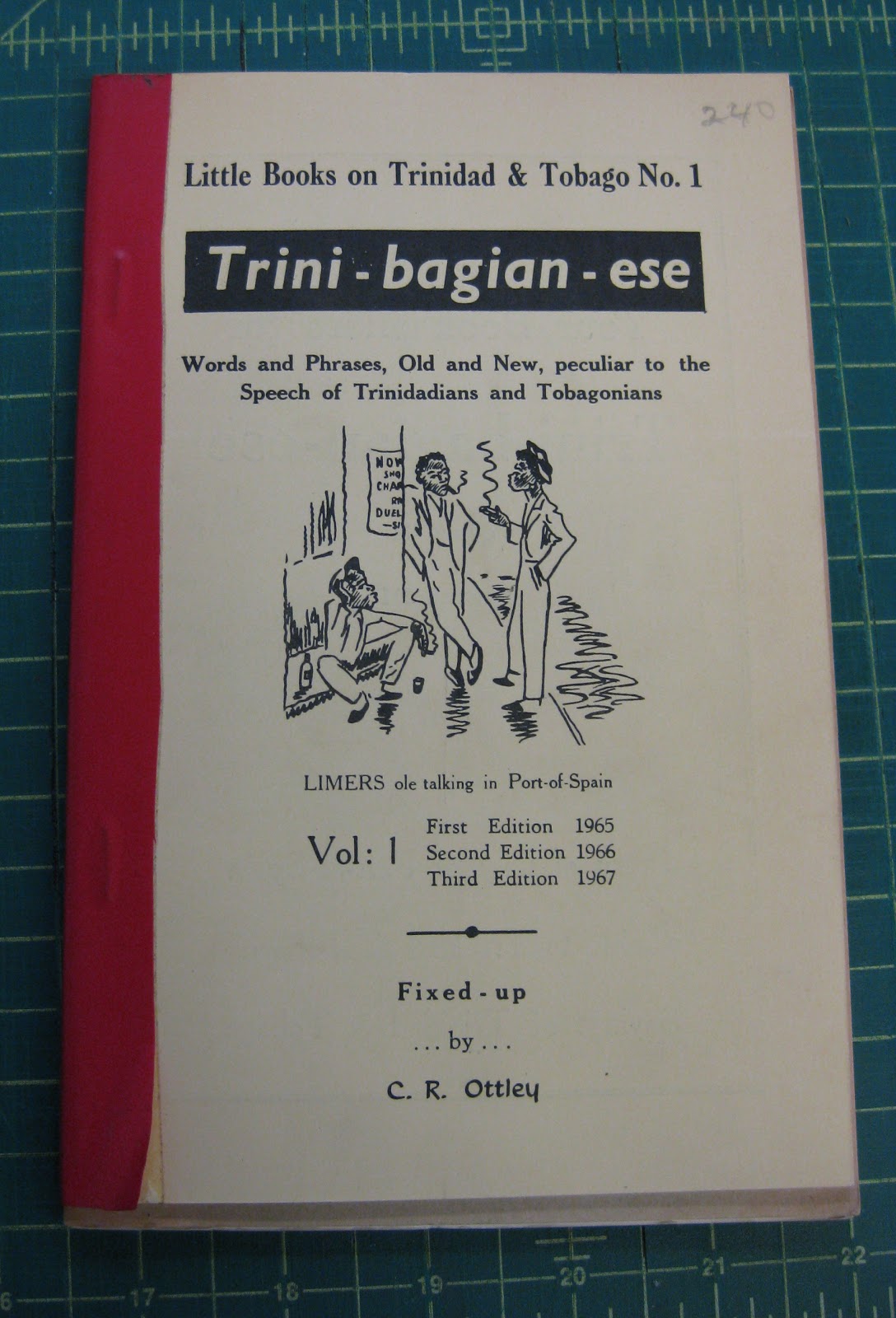
Trini-bagian-ese

You may or may not be aware of my day job as the Book Conservator for the Special Collections and University Archives for the University of Central Florida Libraries. I also do private book repair and after all the horrible do-it-yourself fixes I've seen I feel the need to present this post as a public service announcement about not using staples or tape on your books.

We have a large amount of pamphlets held together by rusty staples that need removing, but I thought these (this?) little pamphlets were in need of documentation because of the... unique way they have been joined together. It is (they are?) three stapled pamphlets that have been stapled to each other and then taped together with some specialty bookbinding tape which is more like electrical tape than anything that should come in contact with a book.


The first order of business is to remove the the horrid red tape that is acting as a spine in this Frankenstien creation....


Heat is applied to the tape with a tacking iron. Heat will usually reactivate the adhesive of the tape, or if you would like to use proper terminology it reactivates the gooiness. However there are cases where heat will just cause the tape to dig its nasty little claws in deeper, so one should always test the waters carefully before removing tape with a tacking iron.


Using a metal micro spatula dipped in rubbing alcohol the tape is slowly lifted

Look at that progress!


Now that the tape is removed you can see where the three pamphlets have been stapled together. The two staples near the spine only go through a pamphlet and a half. There is another set of staples on the back side leaving these helpless pamphlets in a carnivorous jaw of four ruthless staples.

The tape may be gone but some of the tackiness has remained. To remove the sticky I use a soft white eraser, specifically MagicRub, and gently rub the surface. This rolls up all the tape goo in with the eraser poop (ask your mom if you don't understand) and the leavings can be easily brushed away. Once the sticky spine was returned to a satin finish I removed the four staples that held the pamphlets together. This proved to be a Chinese finger trap of sorts since I could not get at the end of the front staples until the back ones were removed and vice versa. After some contorting however, the pamphlets were free for the first time since... probably the 70s.


Now on to the two staples for each individual pamphlet.
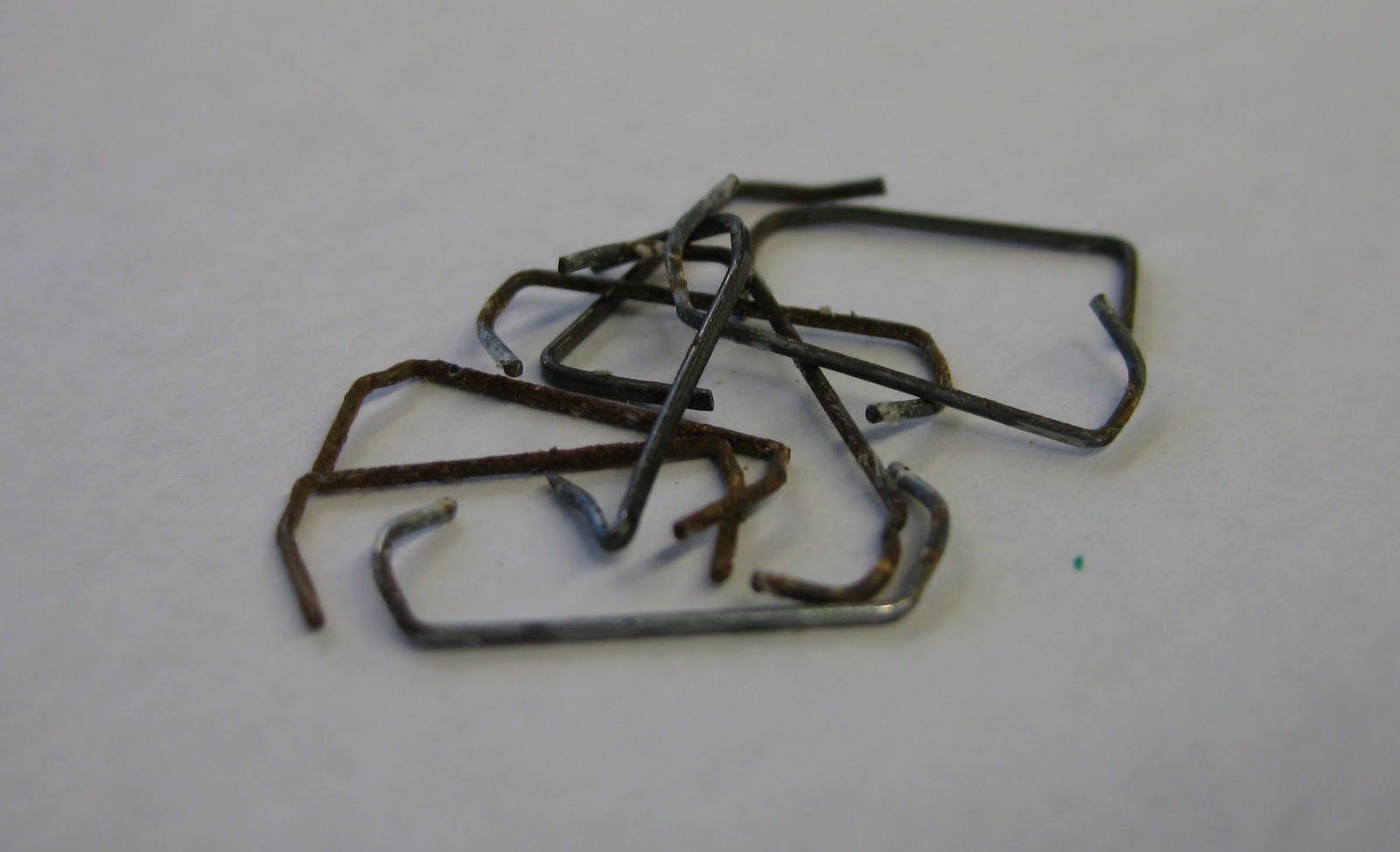
The two photos below illustrate how harmful staples can be. The left shows the rusty staple and the effect it has had on the paper. To the right is the page next to the staple showing how deep the rust has permeated the paper. 


The micro spatula returns, this time sans alcohol, to lift the staple prongs on the inside and then carefully wiggle the staple out the back.

Once the staples are removed new "cloth staples" need to be sewn in to hold the pamphlet together. Here I am using some safe linen thread. The pictures below show the substitution- the pamphlets will never know the difference!


Here they are- separated and free of their rusty shackles. After some paper work they were let loose in the stacks where they now graze freely with their fellow pamphlets; a new and happy life.